Showing posts with label Travel. Show all posts

Friday, February 10, 2012

Romantic Montréal, Canada


How romantic is Montréal? Well, a set of lush lips adorns Tourisme Montréal’s logo, standing in for the “o” in the city’s name!

With European ambience and cobblestone streets lit by gas lamps, where horse-drawn carriages clip-clop past old world buildings, you have the backdrop for a perfect Valentine’s Day.

Old Montréal in particular is “romance central”. There are plenty of dreamy boutique hotels to cuddle up in including the sumptuous, celebrity-favorite Le St-James, formerly a bank. The original vault is now a dramatic spa that feels like a castle keep: indulge in a candle-lit double massage with your sweetie. Small, cozy and tucked into the shadow of Notre-Dame Basilica de Montréal, Auberge Bonaparte is a country-style getaway where you’ll feel like you’re in a small French village.


Pick up a box of hand-made chocolates at Le Maître Chocolatier and nibble them enroute to the Essence Workshop where you and your loved one create your very own perfume. Sign up for Cook and Date’s special Valentine’s Sensual Desserts event: sip bubbly and cook with local chef Anthony Crisafulli to create a sit-down, multi-course dessert menu. Or stop in at the chic new café at the famed Birk’s jewelry store for high tea or lunch and browse Canadian diamonds between sips.


The wooded trails of Mont Royal Park are a serene place for a snowy stroll or a horse-drawn carriage ride. A Valentine’s guided snowshoe trip around the summit by the lights of the city with Les Amis de la Montagne finishes up with mulled wine and chocolates. And there are plenty of places in the city to skate outside arm-in-arm, but the most romantic are Parc Lafontaine’s meandering ice paths that twist and turn to the sound of music.


Dine on fine European cuisine in the warm, dimly-lit Club Chasse et Pêche – there’s no sign on the door and the top-rated Old Montréal eatery has a comfortable speakeasy atmosphere. For inventive modern cuisine created from local Québec products, try the Relais & Châteaux Europea, a contemporary restaurant set in a downtown Victorian.

Mont Royal Park’s lookouts over the glittering city are a perfect place to smooch until the wee hours, as is the new Snow Village where you can spend the night in an ice hotel, visit an ice chapel or keep one another warm with frosty kisses in an igloo.


By: Margo Pfeiff

Wednesday, February 1, 2012

The Saguaro, Palm Springs


Whether you come for the sun, the air, the spas, the style or the natural beauty, there's an undeniable appeal to this oasis of desert modern in the Coachella Valley.

Now there's a new place to lay your head while soaking it all up. The Saguaro opens in February 2012, bringing with it elevated design, delicious food and simple comfort. If you ever needed another reason to escape here, you have one now.

Bright. Light. Colorful. The rooms at the Saguaro immerse you in the desert resort experience that is Palm Springs. Choose your view — mountain, garden courtyard with pool, or city lights. Nearly every room has a balcony or patio and is accented inside and out by the brilliant color of a native Mojave wildflower, creating a visual spectrum of light throughout the grounds. No one perspective is the same.

Guestrooms offer at least 275 square feet of living space and include sitting areas, work stations, hand-crafted, imported Mexican furniture, as well as luxury bath products and linens. The brilliant, desert-inspired color scheme is shared by your indoor and outdoor space and adds to your experience. Feel free to request a color depending on your mood.


There are certain standards by which a visit to Palm Springs is judged. Such as pool time and the scenery that goes with it, the quality of architecture and design, and perhaps most importantly, the ability to enjoy the desert landscape and air, preferably with cocktail in hand. By all accounts, the Saguaro has you more than covered. 
 

Hotel Services

  • Pet-friendly
  • Secure self parking*
  • Laundry and dry cleaning service
  • Wireless Internet Access*
  • Daily yoga*
  • Complimentary local transportation*
*included in daily resort fee

Leisure Amenities

  • Grounds and gardens renovated February 2012
  • On-site spa featuring indigenous treatments
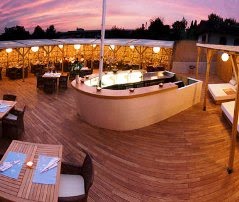
  • Outdoor, heated Olympic-size pool with cabanas and fire pit
  • Two outdoor hot tubs
  • Poolside bar and food service
  • Fitness center

Guestroom Amenities

  • All rooms refreshed February 2012
  • Flat screen, 42" HDTVs
  • Views of surrounding mountains, pool and city (select rooms)
  • Outdoor patios or step out balconies
  • Large working desks
  • Stereo with iPod docking station
  • On-demand movies and music

A touch of old Hollywood glamour. Perhaps the best golf and spas in the west. Groundbreaking mid-century modern architecture. A party circuit unrivaled for its inclusiveness. There is only one Palm Springs, that's for sure. The Saguaro puts you right in the middle of it, just off famed Palm Canyon Drive a mile from downtown. Yet, in true Palm Springs fashion, a stay here is also about privacy and relaxation.


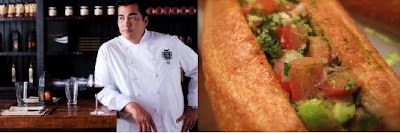
El Jefe is a cool celebration of the culture and cuisine of Mexico City, with a menu focused on the cuisine of what is known by locals as the "Distrito Federal.” With a premium tequila bar and lounge seating, El Jefe is a muted backdrop for Chef Garces' modern Mexican small plates.

Chef

He’s one of the country’s most talented young chefs, winner of the Food Network’s Iron Chef America and a James Beard award. His food draws crowds in Philly, Chi-Town, Scottsdale, and now Palm Springs.
 
The Saguaro opens in February 2012, Book now!
  

Contact

1800 East Palm Canyon Drive
Palm Springs, CA 92264
Maps & Directions T 760-323-1711

Content & photos by: jdvhotels.com

Wednesday, November 2, 2011

The Real Cuba, Austin-Lehman Adventures


For decades, American citizens with a hankering to see Havana had to engage in some serious (and not recommended) 007 business to make that happen. But now, with the launch of Austin-Lehman Adventures' "theReal Cuba" itinerary, visiting Castro country is easy and—more importantly—legal. 

 
The ten-day trip, a far-ranging intro to Cuban life, includes visiting private homes, helping out with community projects, and meeting artists, artisans, and Santería practitioners. After exploring Old Havana, you'll travel via old steam train, vintage car, and even horseback to tobacco farms, coffee plantations, and rural villages. Best of all, Austin-Lehman arranges the charter flight from Miami or Cancún and handles the visa process. 

 
  • Meet in Miami or Cancun for a charter flight to Havana. Transfer to the Hotel Iberostar Parque Central. This evening we are joined by a group of trip leader Christopher P. Baker’s Cuban friends spanning the spectrum of ages and professions as we get oriented with an introductory presentation—‘Chris Baker’s
  • learn about the two-decade-old restoration project that Leal leads; how the effort is self-financed; and how the strength of the local community is maintained in this heavily touristed region.
  • Visit the Flores district to visit the Casa-Estudio de Fuster, the studio-home of José Fuster, commonly called the ‘Picasso of the Caribbean.’
  • Drive through the province of Pinar del Río to Finca Pinar San Luís, the private finca of the late and legendary tobacco farmer and Cuban cigar ‘ambassador,’ Alejandro Robaina.
  • Follow the old Carretera Central via Cuevas de los Portales, Che Guevara’s headquarters during the Cuban Missile Crisis; the faded old spa town of San Diego de los Baños; and Soroa, with a stop at its orchid garden.
  • Board a 1906 steam train to visit the Valle de los Ingenios (Valley of the Sugar Mills), with lunch at Hacienda Iznaga, a former slave plantation where we learn about the roles of sugar and slavery in Cuba’s history
 
Call 800.575.1540 to Book

By: austinlehman.com


Monday, August 15, 2011

Del Carmen Concept Hotel, Guadalajara, Mexico


Del Carmen Concept Hotel, situated in a restored 19th century neo-classical hacienda is a luxury boutique hotel offering a new concept in accommodation; transporting us to the elegant hotels of the belle époque, whilst integrating advanced technology and the avant-garde design of the 21st century.

Dedicated to the Surrealist art movement in Mexico, each suite has been exquisitely designed to pay homage to the most representative artists of the era: Tamayo, Varo, Cuevas, Gerzso, Carrington, Friedeberg, Soriano, Coronel & Vlady.

A magical place that allows us to escape from reality…

Del Carmen Concept Hotel offers 6 double rooms with king sized beds, one twin room with 2 european beds perfect for friends travelling together and 2 suites ideal for wedding nights, honeymoons and romantic getaways.


Del Carmen Concept Hotel
45 Calle Jacobo Galvez
Guadalajara, Mexico
Tel: 52 33 3614 264

By: delcarmen.mx

Sunday, January 9, 2011

Top 10 Luxury Travel Trends for 2011

1. Multi-Destination Vacations – Because travelers want to get the most out of their vacations, there has been an uptick in multi-destination vacations. According to Stanley, "We are starting to see an increased interest in combined itineraries such as India and Bhutan or Peru and Argentina. With new air routes coming on board such as LAN's route between Lima and Iguassu, visiting two countries in one trip is more convenient than ever, affording travelers the opportunity to experience exactly what they want from a combination of countries."

2. The Revival of Group Tours – With the economic recovery still in progress, many travelers are looking for the same exotic travel experiences at a lower price point. Group tours provide a more value-driven travel option without compromising the once-in-a-lifetime travel experience. Recognizing there are many who want a highly experiential vacation at a great value, Cox & Kings provides options such as the new Discovery Group Journeys which engage a small group of like-minded travelers across the globe, averaging from 12-18 individuals from North America, the United Kingdom and Australia.

3. Contemporary Cultural Travel – A history-laden location is no longer enough to satisfy today's intrepid travelers. 2011 will see a desire for more meaningful interactions with artists, trendsetters and experts local contemporary culture. "China is a destination that currently boasts a cutting-edge modern art scene, which has attracted interest from international visitors as well as art collectors," said Stanley. "Travelers want to see beyond the historic art these areas are known for and get a glimpse into what is happening now." Cox & Kings offers "Cambodia & China: Ancient Traditions Revealed in Contemporary Art" which explores the contemporary art scenes in each of these countries.

4. The Resurgence of Travel Experts – While once a great resource for travel information, the Internet has become so oversaturated with non-relevant information that sorting through the mass of travel sites, reader reviews and booking engines has made booking exceptional travel experiences a dicey process at best. This paired with more specialized and specific requests by the traveler has caused a resurgence in working with tour operators and travel agents. “People want to work with a travel professional who has relationships with the hotels, tour guides and intimate knowledge of the best a destination has to offer,” said Stanley. "With more than 250 years in the industry, Cox & Kings has developed invaluable and long lasting relationships worldwide."

5. Not Just Seeing But Learning – The popularity of educational travel will continue to thrive in 2011. Travelers are interested in learning and doing, not just seeing. "Demand has increased for specialized learning experiences – everything from sushi-making in Japan to photography excursions in Argentina. People want to come away with a strong emotional connection with a destination and bring back more than just memories, but a skill they can actually use from a vacation.” Cox & Kings offers a wide variety of learning itineraries from becoming a textile expert in India with "Textiles of India" to learning the art of a sommelier in Lebanon with "Lebanon & Syria: Empires Past".

6. Ride the Rails – A number of new luxury trains have launched in the past year, causing a renewed interest in rail travel that will increase throughout 2011. Rail travel is an easy and comfortable way to maximize travel time, allowing travelers to see a large number of sites without having to pack up and fly or drive between these locations. The Maharajas' Express, India’s first state of the art cross-country train, offers guests luxury and comfort and amazing off-train excursions. The Classical India journey traverses Delhi, Gwalior, Khajuraho, Varanasi, and Lucknow, with return to Delhi. The Princely and Royal India journeys take guests from Mumbai to Delhi (or Delhi to Mumbai) and travels through the heart of regal India, including stop in Vadodara, Udaipur, Jodhpur, Bikaner, Jaipur, Ranthambore and Agra.

7. Experiential Family Travel – The face of the family vacation is changing and they are extending far beyond a week-long island refuge. The demand for hands-on experiences that focus on learning and doing as opposed to just seeing will increase in 2011. According to Stanley, "There is a desire from parents to expose their children to the cultures and lifestyles of the regions that they are visiting. Travel is one of the best educational tools for children." For example, Cox & Kings can create, as part of a family journey to China, an opportunity where teens can help take care of pandas under the supervision of zoo keepers.

8. "Bucket-List" Experiences – 2011 will see in increase in extremely unique, "bucket-list" experiences in far-flung destinations. Travelers are looking to tick those must-see travel experiences off their lists and are now seeking the experiences that will allow them to return home with bragging rights among their friends. These thrill-seeking experiences include: the "Nepal: Himalayan Helicopter Safari" journey by Cox & Kings, which offers the opportunity to view eight of the highest mountain peaks in the world, including Mount Everest, at 29,035 feet; or experiencing the great African migration in Tanzania during the annual zebra and wildebeest migration in the Serengeti with the "Splendors of Tanzania" journey. "Despite seven previous trips to Peru, last week I was finally able to check off one of my bucket list items and fly over the Nasca lines," says Stanley.

9. One of a Kind, Specialty Travel Experiences – Niche travel will continue to grow throughout 2011. From culinary tours to yoga retreats, travelers are looking for specialized itineraries catering to very specific interests. Cox & Kings has recognized this upcoming trend and offers experiences such as the “Antiquarian Book Fair: India” itinerary which takes bibliophiles to the infamous book fairs held in Calcutta and Delhi and offers a glimpse into the multilingual publishing industry and what's new and old in book publishing from around the world.

10. Top Destination Picks for 2011 – "Travelers are always looking for the next hot spot, and these are some of the countries where there’s been pent up demand.” Based on what Cox & Kings clients are asking for, Stanley predicts Libya, Zimbabwe, Lebanon, Colombia and Jordan as the hot destinations for 2011.

By luxurytravelmagazine.com

Tuesday, May 25, 2010

Pushy fliers may show up on TSA's radar

Airline passengers who get frustrated and kick a wall, throw a suitcase or make a pithy comment to a screener could find themselves in a little-known Homeland Security database.


The Transportation Security Administration says it is keeping records of people who make its screeners feel threatened as part of an effort to prevent workplace violence.

Privacy advocates fear the database could feed government watch lists and subject innocent people to extra airport screening.

"Is this going to be the baby watch list? There's a potential for the misuse of information or the mischaracterization of harmless events as potential threats," American Civil Liberties Union lawyer Michael German said.

A TSA report says the database can include names, birth dates, Social Security numbers, home addresses and phone numbers of people involved in airport incidents, including aggressors, victims and witnesses.

Incidents in the database include threats, bullying or verbal abuse, remarks about death or violence, brandishing a real or fake weapon, intentionally scaring workers or excessive displays of anger such as punching a wall or kicking equipment, the report says.

The database was created in late 2007 as the TSA launched a program to prevent the nation's 50,000 airport screeners from being attacked or threatened, agency spokeswoman Kristin Lee said. At the time, TSA officials voiced concern about passengers disrespecting screeners, and they began issuing new uniforms with police-style badges pinned to shirts.

Lee said attacks and threats against screeners are "rare" and the database has records from about 240 incidents. Most are screeners in conflict with other screeners. About 30 incidents involve people such as passengers or airport workers attacking or threatening screeners, Lee said.

Information about passengers is taken from incident reports that the TSA writes when a traveler threatens or attacks a screener, Lee said.

"The program's focus is on prevention," Lee said. The database helps the TSA spot trends in incidents that can shape workplace-safety programs, Lee said.

A TSA document published in February says database information can be given to government agencies and to airports, airlines and rail and bus systems in cases involving their workers or job applicants. "They may be contacted by the TSA if an incident involves their employee," Lee said.

A.J. Castilla, a screener at Boston's Logan International Airport and an official with a TSA union, said he has seen passengers throw shoes at and push screeners, but incidents have subsided more recently.

The ACLU's German said he worries that the incidents in the database are broad. "I've been very angry at an airport because flying can be a very frustrating experience," he said.


By Thomas Frank, USA TODAY

Friday, May 21, 2010

10 tips for healthier travel

Common annoyances like bad food and cramped quarters are simply a fact of travel, whether you’re going by air or land. But you can keep them to a minimum and arrive at your destination with your health and sanity intact. Here’s how:


1) Distribute your luggage between two smaller suitcases instead of one large bag, says:
Edward N. Hanley Jr., MD, chairman of the department of orthopedic surgery at Carolinas Medical Center in Charlotte, NC. This will help you balance the weight while carrying your bags through the airport. Better yet, wheel your luggage.

2) When stowing your carry-on luggage, stand straight and away from the overhead compartment, suggests the American Chiropractic Association. Whenever possible, place heavier bags under the seat in front of you to avoid having to lift them over your head.

3) Before you buckle up, place a small airplane pillow or an inflatable lumbar support in the gap between your lower back and the seat. This will counteract the tendency to slump and decrease the risk of in-flight back pain.

4) Don't cross your legs. It shortens the leg muscles, reduces circulation, and creates an uneven weight on the hips and pelvis, which can cause lower-back pain.

5) Say no to the greasy muffin or mystery meat enchilada. Instead, pack fruit, a whole wheat bagel, or other healthy treats. Or buy some fruit and yogurt or a smoothie at the airport before you board the plane. That way, you're covered if you don't like what they're serving.


In the car

6) Pack an ice chest with small, nutritious snacks such as baby carrots, fruit, peanut butter on whole wheat bread, and yogurt. Throw in some bottled water, orange juice, or 1% milk.

7) If fast food is your only option, stay away from fried items and fatty accompaniments such as mayo and oily dressings. Grilled chicken sandwiches are okay if you ask to hold the mayo. Ordering a salad? Go easy on the dressing, or order a light dressing.

8) Before getting into the car, take a short walk to loosen your leg muscles, and be sure to stretch, advises the American Chiropractic Association. Long trips should be treated like an athletic event.

9) Use a back support. The widest part of the lumbar support pillow should be between the bottom of your rib cage and your waist. You can find a wide variety of back supports designed for car use in stores and online.

10) Tilt your rearview mirror up a little bit. This will help your posture by making you sit up straighter to see out the back window. You should still be able to see clearly out the back

 
content by: The Editors of Prevention

Friday, May 14, 2010

Worst Airline For Free Seats

Which airlines are generous with frequent-flier award seats and which aren't.


If you're hoping to snare a free ticket using your frequent-flier points, you're much better off being a member of the program at Southwest or Alaska airlines than that of almost any other airline -- especially US Airways and Delta.

A study testing the availability of free seats showed that Southwest Airlines Co. could fulfill 99.3% of requests for award seats requiring standard mileage levels, and Alaska Air Group Inc.'s (NYSE: ALK , news) Alaska Airlines offered choices on 75% of requests. US Airways Group Inc. could fulfil just 10.7%. Delta Air Lines Inc. was among the stingiest, too, with awards requiring the lowest mileage available for only 12.9% of requests made by IdeaWorks Co., a consulting firm.

Some frequent-flier programs are far more generous in granting awards than others, and the gap right now is large. WSJ's Scott McCartney tells us which airlines make it easier -- and which make it harder -- to use miles, and why.


Southwest's simple frequent-flier program: Fly eight round-trips within two years to qualify for a free ticket. Ample inventory of award seats make it attractive to travelers.

The numbers codify what a lot of fliers have suspected for some time, that some airlines are making it almost impossible to score a free trip using miles -- at least without having to pay a significantly higher price in miles than the standard award. The problem is, in part, that there are just too many miles chasing too few seats. Worldwide, there are an estimated 10 trillion frequent-flier miles outstanding. And the problem of scarce seats is getting worse: The number of awards redeemed fell significantly at several big carriers -- including Continental Airlines Inc. and AMR Corp.'s (NYSE: AMR, news) American Airlines -- between 2008 and 2009. So did the percentage of passengers flying on awards.

"They're killing these programs by not allowing more reward availability," said IdeaWorks President Jay Sorensen, who specializes in loyalty program, marketing and revenue-boosting strategies for airlines. "When you look in February for travel in October and see major markets shut out, that's disturbing. That's wrong."

IdeaWorks made 6,160 queries at 22 airline websites -- 280 seat requests at each airline. The firm tested long routes and shorter trips under 2,500 miles in big markets. At most airlines, it had greater success with shorter routes. The requests were made in February and March for travel in June through October. Among carriers outside the U.S., Air Canada, Deutsche Lufthansa AG and Singapore Airlines were among the most generous.

The world is awash in frequent-flier miles partly because airlines have built a lucrative business selling them to credit card companies, hotels and others who use miles as incentives and rewards. Last year, two-thirds of the 175 billion (yes, billion) miles American issued went to the 1,000 partners who pay for miles, according to the company's filings with the Securities and Exchange Commission.

Award availability has also been affected by schedule cuts and fuller airplanes during the last year. Mergers, economic weakness and perhaps airline tight-fistedness with seat inventory made an impact, too. In general, airlines would rather sell a seat to you for cash than "give it away" as a frequent-flier award.

At Southwest, fuller planes meant there were fewer award seats available for last-minute bookings, a spokesman said. The number of awards redeemed fell by more than 14% last year, according to Southwest's latest 10-K filing with the SEC. The number of awards redeemed at Continental fell 18.8% in 2009 compared to 2008; American saw the number of awards drop 16.1%, according to 10-K annual reports filed by the companies. JetBlue Airways Corp. (Nasdaq: JBLU, news) saw a slight increase in the number of awards redeemed; Alaska had a 48% jump in redemptions.

Some of the decline clearly relates to the economy: The recession caused fewer people to take trips. Cheaper ticket prices in 2009 may have enticed travelers to hold on to their miles as well. "Especially during the first half of 2009, when the recession and consumer confidence were arguably at their worst, we simply saw fewer AAdvantage members redeeming their miles for award travel," said Tim Smith, a spokesman for American.

But in 2008, when the economy was also weak, award redemption increased. And last year, the percentage of passengers flying on frequent-flier awards fell sharply at several airlines, indicating that even those who did want to travel found award inventory tight.

Awards totaled 8.3% of revenue passenger miles (a revenue passenger mile is one passenger flown one mile) at UAL Corp.'s (Nasdaq: UAL, news) United Airlines, down from 9.1% in 2008, for example. Continental fell to 6% from 8.5% in 2008. One factor unique to Continental, a spokeswoman said, is that the carrier's entry into the Star Alliance last year prompted more of its customers to book awards on partner airlines, which may have enlarged the drop-off in traffic on Continental flights.

Last year, 15% of the passenger traffic on Alaska Airlines was using frequent-flier awards, according to parent company Alaska Air Group's 10-K filing. That was highest among major airlines. By comparison, only 4% of US Airways' passenger traffic was from frequent-flier awards -- the lowest total reported in SEC filings.

Most airlines offer two award redemption prices for seats -- a standard with restrictions and an unrestricted typically costing twice as many miles. But, some carriers, including Delta and US Airways, have added a third award level -- a standard, a mid-level and an unrestricted tier. That likely further shrank the availability of awards at the standard level, and may be one reason why Delta and US Airways did so poorly in the IdeaWorks study. Indeed, IdeaWork's Mr. Sorensen said that often when he couldn't find a domestic award at Delta at the standard 25,000-mile level, he was able to find seats at the 40,000 mile mid-tier level.

US Airways blamed its poor score in the study, in part, because it typically makes award seats available closer to when flights depart instead of the many months ahead of time at other airlines. When IdeaWorks researchers looked three- to six-months in advance, US Airways hadn't opened up a lot of its seats to awards, said Fern Fernandez, US Airways director of marketing programs and loyalty. In addition, the airline's three-tier system would reduce the availability at the lowest mileage level, he said.

"We are making inventory available, it's just available at different price points," Mr. Fernandez said.

The introduction in January of the third mileage level -- completely unrestricted "Go" awards -- has added flexibility and enabled customers to redeem more awards, he said. So far this year, the number of awards redeemed is up 32%, Mr. Fernandez said.

Delta, which doesn't disclose in its SEC filings how many awards were redeemed each year, how many miles or awards are outstanding, or the percentage of passengers flying on awards, says its low standing in the IdeaWorks survey resulted from problems the airline had combining reservation platforms between Delta and Northwest Airlines in the months the survey was conducted.

But Delta says that award inventory has been too skimpy. Some of that may have resulted from its merger with Northwest, where more customers in a combined program are chasing after awards and upgrades, and inventory had to be recalibrated in many markets, the airline said.

"We have listened very closely to our customer feedback with respect to award availability," said spokesman Paul Skrbec. "In order to have an effective loyalty program, we need to have an adequate number of award seats available to make it attractive."

Starting later this month and through 2011, Delta will be rolling out tools on its website to make it easier for customers to find travel awards, he said.

The best advice for putting your miles to good use? Use them for upgrades when you can since those are usually a better value. (It makes more sense to spend miles on an upgrade worth $1,000 or more, rather than using miles on a cheap domestic ticket.) Also, use miles for last-minute trips, when airline fares are often higher. To get seats to vacation destinations, you typically need to book 11 months in advance, when airlines open up flights for reservations. But if you do try to book award tickets early and find no seats, keep trying. Airlines do make more award seats available if sales are slow and flights have lots of empty seats.

If you do decide to look for an upgrade, be prepared to open your wallet. Four of the five U.S. airlines flying long-haul international trips -- American, United, Continental and US Airways -- have added "co-payments" to international upgrades, requiring customers to pay in miles and cash if an upgrade is available. Delta, which doesn't charge a cash fee for an upgrade, restricts the coach fare classes eligible for upgrades, forcing passengers interested in an upgrade to purchase a coach ticket often several hundred dollars more expensive than the cheapest fare available.

United began imposing co-payments in January for both international and domestic flights. A domestic upgrade at United now costs 15,000 miles plus $50-$100 on discounted coach tickets.

Katherine Calvert, a "premier executive" elite-level flier on United who tallied 40,000 miles in the first four months of this year, has seen her loyalty to that airline wane now that she often has to pay for upgrades. She is still entitled to free space-available upgrades as a member of one of United's top tiers, but not on the "Premium Service" flights between New York and California she typically flies.

"It infuriates me every time," she says. She recently tried JetBlue, and is considering a switch. The imposition of upgrade fees, she says, "flies in the face of basic loyalty program principles."


provided by: The Wall Street Journal by Scott McCartney

Monday, May 10, 2010

Affordable New Hot Spots

10 destinations — from Malaysia to Marseille — that fuse style, authenticity, and affordability.

You’re kicking back in a landscape of rolling vineyards and castle-topped towns. The days are filled with beautiful drives and visits to local vintners, where you sample the fruit of their labors. You might swing by a rustic wine bar for a tasting. Nights you bed down at a small hotel with cabin-like rooms and a blue-walled restaurant that blends harmoniously with the hotel’s collection of glass aquariums.


Is this Tuscany? Burgundy, perhaps? Not quite. Read on for more amazing, untrammeled places where the dollar still goes far.


Langkawi, Malaysia

Why Go Now: This cluster of 99 islands off Malaysia’s northwestern coast is a relative neophyte when it comes to tourism. Most of the main island remains a nature-lover’s paradise, swathed in mangrove and tropical rain forests, and it was recently designated a UNESCO Geopark — the first in Southeast Asia.

The Details: The name Langkawi refers to the archipelago in general and to its largest island specifically. On the southwestern coast of the main isle you’ll find Pantai Cenang beach, lined with guesthouses and bars under coconut palms. Locals flock to a beachside food truck called Tsunami Laksa for asam laksa (hot-and-sour fish soup with rice noodles). At the northern tip of the island, Tanjung Rhu is a tranquil oasis: two miles of silver sand and calm water. Much of Langkawi retains its traditional charm, on view in Pantai Cenang at the Bon Ton Resort (doubles from $150), a small village of formerly dilapidated Malay wooden houses transformed into stylish lodgings by hotelier Narelle McMurtrie.

Marseille, France

Why Go Now: Once known as a gritty seaport, this coastal city has recently spruced up its waterfront and is attracting a more sophisticated crowd from Paris.

The Details: Open-air cafés edge the Vieux Port, where street vendors sell ice cream cones and fish sandwiches. Just behind the Quai de Rive Neuve, in the newly posh district of St.-Victor, the artsy Casa Honoré (doubles from $213) has four simple guest rooms, a tapas bar, and a shop that sells furniture designed by owner Annick Lestrohan. Try browsing for artisanal olive oils at Place aux Huiles.


Nanjing, China


Why Go Now: While this ancient capital of China is slowly modernizing, it remains staunchly loyal to its past. Witness new restaurants, hotels, and the Nanjing Museum of Art & Architecture — set to open this summer — all juxtaposed with centuries-old monuments and traditions.

The Details: Make Sofitel Galaxy Nanjing (doubles from $125), in the heart of downtown, your base. The 278-room property overlooks Xuanwu Lake. For authentic local food, try the 20-course small-bite tasting menu, including duck sesame buns, at the Galaxy Restaurant (dinner for two $40) in the Mandarin Garden Hotel. The Nanjing 1912 neighborhood has classic early-20th-century Chinese architecture and a vibrant club scene at night.


Moravia, Czech Republic

Why Go Now: This under-the-radar province is emerging as Eastern Europe’s newest wine region. Ninety-four percent of the Czech Republic’s burgeoning wine production (Grüner Veltliner and Cabernet Moravia) comes from its rolling vineyards and castle-topped towns. The regional capital, Brno, in the center of Moravia, is dotted with Modernist houses designed by Adolf Loos and Ludwig Mies van der Rohe (the creator of the famous Brno chair) and is the perfect jumping-off point for exploring the area.

The Details: Stay at the new nautical-themed Noem Arch Hotel (doubles from $141), with 18 cabin-like rooms and a blue-walled restaurant that blends harmoniously with the glass aquariums. Farther south, in Mikulov, the village's Jewish heritage is the inspiration for artist Sylva Chludilova’s paintings at Galerie Efram. In neighboring Valtice, sample an extensive wine selection at Narodni Salon Vin, in the town château.


Ko Lanta, Thailand

Why Go Now: A mere eight years ago, Ko Lanta was an isolated jungle on an inaccessible island. Since then, a handful of resorts have settled in along its palm-lined coves.

The Details: The island’s western shore, with all its beaches, is attracting the most attention. Layana Resort & Spa (doubles from $289) is a beachside complex of 50 suites and a saltwater pool. The 185-room Rawi Warin (doubles from $174) overlooks pristine Klong Tob Bay. At the lantern-lit Red Snapper (dinner for two $30), young Dutch chefs make everything from tapas and Turkish dips to mojitos and steamed mussels.


San Blas, Panama

Why Go Now: This archipelago in northern Panama is experiencing a mini boom in lodges, where travelers can escape the crowds of the more popular Bocas del Toro.

The Details: After a short flight from Panama City to Playón Chico (which the hotel will help arrange), guests of one of the five overwater casitas at Yandup Island Lodge (doubles from $160, all-inclusive) are picked up by boat and taken to the property’s private island. Snorkelers can spot more than 75 species of coral, hundreds of varieties of tropical fish, and the occasional dolphin. On a nearby island, the Hotel Uaguinega (doubles from $300, all-inclusive) has 10 thatched-roof cabins and a beachfront restaurant that serves fresh fish. Book one of the hotel’s guided tours of neighboring villages, where you can buy crafts made by the local Kuna tribe.


El Calafate, Argentina

Why Go Now: A formerly rough-and-tumble wool-trading outpost in southern Patagonia, tiny El Calafate has now been discovered by adventure junkies and celebrities such as Francis Ford Coppola, who scouted the area for an upcoming film.

The Details: This is a place where you can have grilled steak and Mendoza wine for just $25 a person after a day spent exploring the region’s natural beauty: towering glaciers, deep fjords, and grassy steppes. Dine on sirloin wrapped in boar with a Malbec wine sauce at the brick-walled Pascasio M (dinner for two $49) or head to the boisterous La Tablita (dinner for two $48), known for grilled meats and fish. Brace yourself against El Calafate’s clear and chilly nights in a sweater from Vellón Negro, woven from local wool. The best places to stay are beyond the town’s center. The 12-room Patagonia Rebelde, Posada & Historia (doubles from $110, including breakfast) is modeled after a historic railway station. Much more space age, Design Suites Hotel (doubles from $140, including breakfast) has soaring glass walls and views of neon-blue Lago Argentino.


Auckland, New Zealand

Why Go Now: This yachting-obsessed city has more than its share of sophisticated food and art. Best of all, the exchange rate turns the city’s hotels, restaurants, and boutiques into affordable indulgences.

The Details: The downtown marina is the site of the new Westin Auckland Lighter Quay (doubles from $216), an understated 172-room hotel. In midtown, the vintage Modernist furnishings at the renovated Hotel DeBrett (doubles from $195) create a pied-à-terre feel. At Merediths (dinner for two $110), chef-owner Michael Meredith turns out modern New Zealand dishes such as smoked salmon with candied fennel. To see artwork by N.Z. artists, browse the galleries (or websites of) Sue Crockford or Michael Lett.


Dakar, Senegal


Why Go Now: This city has one of the world’s most exciting music scenes—from reggae, rap, and hip-hop to traditional tribal drum, string, flute, and xylophone. Indeed, Dakar is a nonstop concert, as CD’s blare in the streets and markets and live musicians and bands hold forth in any number of cool clubs, cafés, and dance boîtes.

The Details: Overlooking the Atlantic, the Hotel Sokhamon (doubles from $147), has a funky vibe, with brightly colored walls and a conch-shaped staircase. After dark, head to world-music superstar Youssou N’Dour’s club Thiossane, or the ultracool Just 4 U.


Rusinga Island, Kenya


Why Go Now: Just off the eastern shore of Lake Victoria, Rusinga Island is blissfully laid-back. The arrival of a new Micato Safaris lodge probably won’t change that, but is giving travelers a stylish place to unplug.

The Details: Stay in one of the six thatched cottages (net-draped beds, ceiling fans, large baths) at Rusinga Island Lodge (doubles from $440). Each bungalow faces an open-air restaurant where the spicy fish curry pairs well with a Tusker Ale.


content by: Travelandleisure.com

Sunday, March 28, 2010

Don't jump on that flight before knowing options

You may be thinking of a vacation after seeing some tempting sales on spring and summer travel from Southwest and other airlines.


But while the price may be right, the conditions might not be ideal. You may have to fly on odd days of the week or times of day to get the best fare. And the lowest fares the ads tout are likely just teasers.

Before you take the bait, here are five tips on shopping for fares.

1. The sweet spot: Buy early in the week.

According to Rick Seaney of FareCompare.com, airlines are doing more short-lived sales, with three-day sales becoming the norm. These deals are typically put in the system on Monday nights, so you need to shop from Tuesday through Thursday to get the cheapest prices, he said.

2. Do the comparisons.

You'd love a weekend at the beach and decide you want to go to Ft. Lauderdale, Fla., on April 9 and return on April 11, in time for work the next day.

On Wednesday, AirTran Airways and Delta Air Lines were offering sale fares on their Web sites for as little as $44 one-way from Atlanta. But that low fare was good for only one destination — Charlotte, N.C., not exactly a tropical location.

Both airlines offered a $74 one-way sale fare to Ft. Lauderdale. But your weekend jaunt wouldn't qualify because Friday and Sunday travel is excluded for the best fares.

For the April 9-11 trip, AirTran was cheaper on Tuesday — $309 was its lowest price, while Delta's was $408.

So, travelers should read the fine print and be aware that terms and fares can change from one day to the next. Example: In Delta's sale, the lowest fare to select U.S. cities was $59 on Tuesday. It was lowered to $44 on Wednesday for the route to Charlotte to match AirTran. Also, the terms of Delta's sale as of Tuesday stated the fares were for travel starting April 12. That was moved up to April 6 on Wednesday for Florida travel, again matching AirTran.

And here's another reason to buy on Tuesdays. On Wednesday, the cheapest AirTran roundtrip ticket for the Ft. Lauderdale itinerary had spiked to $428. Delta's cheapest ticket on Wednesday was still $408. If you could wait a week, you could fly Delta for $209 roundtrip, if you bought the ticket Wednesday. But you wouldn't get brunch because you'd have to leave for home at 5:40 a.m. on Sunday, April 18, to get that rate. Had you bought that Delta ticket on Tuesday, it would have only cost $149.

3. Be mindful of your location.

Airlines may more frequently hawk fare sales from their hub cities. For instance, Chicago is a hub for United Airlines, while Miami is a hub for American Airlines. More flights into and out of those cities means more seats to fill. This can lead to more chances for discounts, depending on season and other factors.

Veteran Minneapolis travel industry expert Terry Trippler advises people in a non-hub city to be ready to buy just about anytime a sale is offered.

A good example: On Wednesday, Continental Airlines was offering fares as low as $218 roundtrip between Tampa, Fla., and Las Vegas. That was a good deal considering the distance, the popularity of travel to Vegas and the fact that neither city is a hub for Continental.

Those in hub cities can be more patient.

"If I were in a hub city I might wait awhile — especially a hub where a low-fare airline has a decent percentage of the business," Trippler said.

Atlanta is a good example. It is a hub for discount carrier AirTran. Baltimore, where both Southwest and AirTran have a significant presence, is another example.

4. Pay your fees up front.

Some of the good feeling generated from scoring a great deal can dissipate if you get hit with more than $50 in bag fees. So, pack light and use all that space in your carry-on bags.

When you do check bags, be aware that some airlines charge more if you pay the fee at the airport. You can pay up front on your airline's Web site and save some money.

US Airways, for instance, charges $23 to check your first bag online, but $25 at the airport. For a second checked bag, US Airways gets $32 online or $35 at the airport.

5. Wait, but not too long.

You don't have to book months in advance to get the best deals. Many airlines are recycling similar sales over and over again as they seek to fill planes amid a turnaround in demand for air travel.

But, FareCompare's Seaney warns that procrastinators may not find the same deals they did just six months ago. That's because since the end of the third quarter of 2009 seats have become more scarce and prices more firm so airlines have no incentive to release cheap seats to those who procrastinate, Seaney said.

Also, book your ticket sooner for the busier summer season than you would if you plan to fly in the fall or winter.

While some airlines offer last-minute deals to certain points on certain days, in general for leisure travel it is a good idea to give yourself a cushion of at least a month from the time you buy your ticket to the time you plan to travel.


By Harry R. Weber, AP Airlines Writer

Thursday, February 25, 2010

How to get the best seat on the plane and hold it

You wanted that spacious seat in the exit row but someone beat you to it. Or you reserved a seat online, but checked in for the flight and found your seat was given to another passenger. There's a trick to getting a coveted seat and preventing it from being given away.

Here are some suggestions on how to get the best seat and hold onto it.

SPACE TO STRETCH

You're booking a flight online, and you want to get the best seat possible. But it looks like the coveted emergency exit row is full. Not necessarily, says Matt Daimler of SeatGuru.com.

Seats in the exit rows generally open up only 24 hours before a flight. So you can't get them when you book, but you can snatch them when you check in online. But you'll want to check in as soon as possible: there are cases in which frequent fliers can get preferred access.

And remember, emergency exit rows are not ideal for families. Passengers have to be at least 15 years old to sit in these rows.

If you are lucky enough to grab an emergency exit row seat, select a seat in the second row, Daimler says. In planes with two rows for emergency door access, the front seats generally don't fully recline.

Another option for extra space? The bulkhead seats. These are the seats at the front of each section of the plane — so you won't have to deal with anyone reclining in front of you. But not all bulkhead seats are created equal.

Because the bulkhead seats face a wall, some often offer space for the knees but not enough space to stretch your legs. Some planes — generally those with a first-class section _have a cut out in the wall that allows for your legs to extend.

Bulkhead seats in first-class often are not desirable seats because they don't offer enough legroom. This is why sometimes, Daimler says, you might find a better seat in coach.

BY THE NUMBERS

When booking a seat, pay attention to a little number the airlines call seat pitch, especially if you're tall. The legroom factor, which generally hovers around 31 inches for domestic flights, is listed on SeatGuru.com for numerous aircraft types at every major airline. You can also check other small, but important details, such as whether the seat you're about to book is too close to a restroom.

Some seats within a single plane cabin have different seat pitch. By way of comparison, United's economy plus section has more legroom than its regular seats, but about the same as JetBlue's standard seats.

"So many people shop by price (when choosing a flight)," Daimler says. "This is when a little homework really goes a long way."

UPGRADES

You're preparing for a long flight, and you're hoping to move up to business or first class? There aren't any magic bullets here. The keys: Fly a lot and be nice.

The most effective way to raise your chance of an upgrade without paying through the nose is to join frequent flier programs and rack up points, says Jami Counter, senior director of TripAdvisor Flights.

Aside from that, a potential upgrade will require a little charm. Many people underestimate how much power that overworked gate agent actually has, says Counter. An agent has the power to choose whom to upgrade, and in some cases, whom to bump. So make airline workers your allies: When you reach the gate, ask the agent if any seats have opened up in the front of the plane.

For a fee that ranges between $50 and several hundred dollars — much cheaper than the difference in price when you book — you'll be able to move on up.

ODDBALL SEAT ISSUES

Sometimes you book on a travel site like Expedia or Orbitz, but you check in the day before your flight and you don't have a seat. Why does this happen?

According to an Orbitz spokeswoman, most airlines only allow about 75 to 80 percent of their seats to be booked before flight time. If you're booking too close to your flight, you might be out of luck.

The remaining seats are issued at the airport on the day of departure. Airlines will then move people around to accommodate families who aren't seated together or people with disabilities and special needs.

Another reason you might not end up with the seat you booked? Sometimes an airline will change an aircraft at the last minute due to weather or an operational issue. If the aircraft changes, seat assignments may need to be adjusted.

Some airlines also keep more seats or rows for premium travelers. You won't always know which seats these are when you book. This is especially common on seats on a codeshare flight — where one airline sells tickets but the flight is operated by another. (Example: you booked a US Airways ticket but the flight is actually operated by United.)

How can you prevent it? There isn't a lot you can do to avoid being moved around by an elite frequent flier. But to ensure you have the seat you booked on a travel site, visit the airline's Web site after you book. If the
site doesn't reflect your seat request, call the airline and see if you can make a reservation over the phone.

THE FUTURE

It wouldn't be the airline industry without extra fees. Counter of TripAdvisor says passengers should be prepared for a new charge on the horizon: a seat selection fee. Allegiant and Spirit already do this. United and JetBlue charge for roomier seats.

The one time a seat fee didn't work? In the summer of 2001, when American removed some seating from the cabin and announced it would charge extra for "more room throughout coach." It didn't fly. The airline reinstalled extra rows of seats in 2005.

 
By SAMANTHA BOMKAMP, AP Transportation Writer